

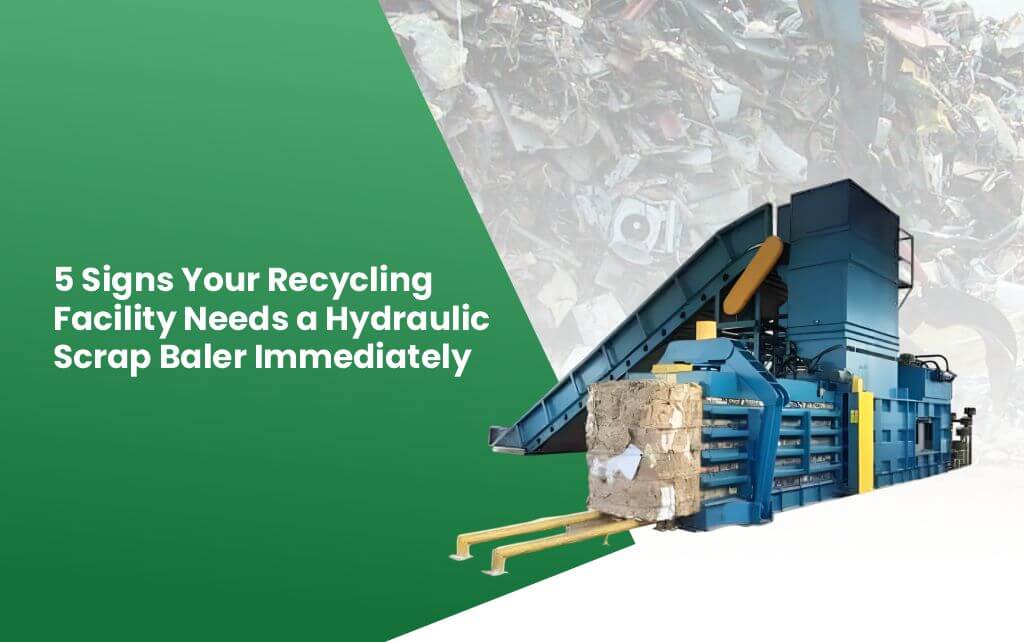
5 Signs Your Recycling Facility Needs a Hydraulic Scrap Baler Immediately
Recycling facilities work under constant pressure. Material keeps coming in, storage fills up fast, and buyers expect consistent bale quality. When a plant starts falling behind, the issues usually don’t show up overnight. They build slowly until they become impossible to ignore.
That is exactly why many facilities reach a tipping point where a hydraulic scrap baler is no longer optional. It becomes a must-have investment. The right machine doesn’t just tidy up the yard. It improves flow, reduces waste, cuts labor, and increases revenue across the board.
This guide breaks down the five biggest signs a facility needs a hydraulic scrap baler immediately. These signs come from real-world observations, discussions with recycling managers, and insights from equipment experts across the industry. Super Recycling Solutions has worked closely with multiple facilities, and these pain points show up again and again.
If a facility checks even one or two of these boxes, it may already be losing money every day.
1. Storage Space Is Always Full or Overcrowded
One of the clearest warning signs is a yard that feels smaller every week. Material piles up faster than the team can process it. Workers may start pushing scrap to the corners of the yard or mixing different grades just to create room for incoming loads.
Why this happens
Without a baler, scrap stays in loose form. Loose scrap takes up a massive amount of space. Even a heavy-duty material like steel or aluminum occupies far more volume before compaction.
A single hydraulic baler can reduce the space requirement by up to 70–80 percent. Scrap that once filled an entire bay can be compressed into neat, stackable bales.
The hidden cost of poor space management
- Overflowing storage forces facilities to turn away suppliers.
- Mixed scrap reduces resale value.
- Additional handling costs rise as workers spend extra time reorganizing piles.
- Fire hazards increase with uncontrolled clutter.
A facility that constantly fights for breathing room is a facility that needs a baler. Installing one reduces volume instantly, freeing space for more throughput and higher profitability.
2. Labor Costs Keep Rising While Output Stays the Same
Many facilities rely heavily on manual handling. Workers may sort, move, separate, and reorganize material multiple times before it is ready for transportation. When operations grow, this only gets harder and more expensive.
When labor becomes a bottleneck
Here are common signs labor has reached its maximum capacity:
- Workers spend more time moving scrap than processing it.
- Overtime becomes the norm just to maintain basic output.
- Staff shortages cause immediate slowdowns.
A hydraulic scrap baler minimizes unnecessary handling. Scrap goes in once, gets compressed, and comes out in a controlled shape ready for shipping.
How a baler changes the workflow
- Fewer touchpoints for each load.
- Reduced dependency on manual labor during peak hours.
- Higher processing speed per worker.
For many recycling centers, the labor savings alone justify the investment. Managers who introduce a baler often report steadier workflow and fewer employee injuries related to heavy manual movement.
3. Your Buyers Are Complaining About Load Quality
Buyers—whether they are mills, foundries, exporters, or large recyclers—care about one thing: consistent, clean, properly packed scrap. When material arrives loose, oversized, or contaminated, it creates additional work for the buyer. That usually results in one of three outcomes:
- Discounted pricing
- Returned loads
- Long-term loss of business
Why consistent baling matters
A hydraulic baler creates uniform bales that meet industry requirements. This improves:
- Load density
- Transport efficiency
- Grading accuracy
- Overall buyer satisfaction
Facilities using a Scrap Baler Machine almost always see an increase in demand from buyers. It provides a reliable product they can process quickly without any extra preparation.
A real example many facilities face
A mid-size recycling plant might send loose scrap packed into open trucks. Buyers often complain that:
- The material spills during transport.
- Hidden contaminants affect purity levels.
- Weight measurements become inconsistent.
Switching to baled scrap solves these issues instantly. The consistency of the bale also helps ramp up negotiations with new buyers since a facility can now provide a standardized product.
4. Transportation Costs Keep Going Up
Transport is one of the biggest operating expenses in the recycling sector. Facilities that ship loose scrap almost always spend more than those that bale their material.
Loose scrap equals low load density
A truck carrying loose material rarely reaches its full weight capacity. Instead, it maxes out on volume far too early. This leads to:
- More trips per month
- More fuel consumed
- Higher shipping bills from logistics companies
Baled scrap changes the math completely
A hydraulic baler compresses the material into dense blocks. This allows each truck to carry significantly more weight without wasting space. Many operators report an improvement of 40–60 percent in load density after switching to baled shipping.
The financial impact
Higher density = fewer trips = lower transport cost.
This means:
- Faster turnover
- More revenue per truckload
- Lower emissions from transportation
For large facilities, these savings add up to thousands every month.
5. Your Facility Is Missing Out on Better Pricing and More Buyers
Scrap buyers pay a premium for high-density, well-compacted bales. They move quickly through automated processing lines and reduce their internal handling work. Without baling equipment, a facility automatically limits itself to low-paying buyers willing to accept loose scrap.
Why does this limit growth
Loose scrap often sells at lower rates because:
- Buyers expect sorting work on their end.
- Transport is inefficient.
- Material purity becomes questionable.
A Scrap Baler Machine changes this completely. Baled scrap attracts:
- Exporters looking for clean bundled loads
- Foundries needing uniform feedstock
- High-volume buyers who buy in bulk
Better pricing becomes the norm
Uniform bales directly impact revenue per tonne. Many facilities report price jumps of 10–20 percent simply because they provide easier-to-handle material.
It strengthens your reputation
Super Recycling Solutions often sees that baled scrap helps a facility build trust faster. Buyers know they will receive a predictable product. Over time, this translates into larger contracts and longer partnerships.
6. You’re Struggling to Stay Compliant With Safety Guidelines
Safety rules in the recycling industry are becoming stricter. Loose piles of scrap create several risks:
- Unstable heaps that can collapse
- Sharp, scattered pieces cause injuries
- Fires caused by unmanaged metal friction or hidden combustibles
A hydraulic baler helps keep everything organized and contained. With compacted bales, the yard looks cleaner and safer. Many insurance providers also look favorably at facilities that use balers due to reduced hazards.
How a baler supports safer operations
- Scrap stays in contained blocks instead of random piles.
- Forklift operators have better visibility and more control.
- Walkways stay clear.
- Fire load decreases significantly.
If a facility faces repeated safety warnings or audit pressure, a baler becomes a practical and often necessary solution.
7. Processing Delays Are Slowing Down Your Entire Operation
Every recycling facility aims to maintain a smooth, predictable workflow. When delays occur, the whole operation slows down:
- Incoming trucks face long waiting times.
- Sorting areas get jammed.
- Output schedules fall behind.
Most of these problems trace back to uncontrolled material volume and inefficient scrap handling.
A hydraulic baler acts like a flow stabilizer
By compacting material in real time, it prevents scrap from piling up. This directly improves:
- Sorting speed
- Yard mobility
- Worker productivity
- Outbound scheduling
Why fast processing matters
The quicker a facility can move scrap from the unloading bay to outbound shipping, the more profitable it becomes. A baler doesn’t just compact metal; it helps structure the entire rhythm of the operation.
Conclusion: A Hydraulic Scrap Baler Isn’t a Luxury—It’s a Smart Investment
Many recycling facilities wait too long before upgrading their equipment. By the time they consider a baler, they’re already dealing with bottlenecks, lower profits, and frustrated buyers. The signs are usually clear: crowded storage, rising labor costs, transportation inefficiencies, safety issues, and inconsistent output.
A hydraulic scrap baler—especially one selected and installed with guidance from experts like Super Recycling Solutions—solves these problems from the root. It creates order, increases revenue, and gives a recycling facility the ability to scale confidently.
For any facility experiencing the signs mentioned above, the right time to upgrade isn’t next quarter or next year. It’s now.
To explore the best hydraulic balers, request a consultation from Super Recycling Solutions and get expert guidance tailored to your operation.