

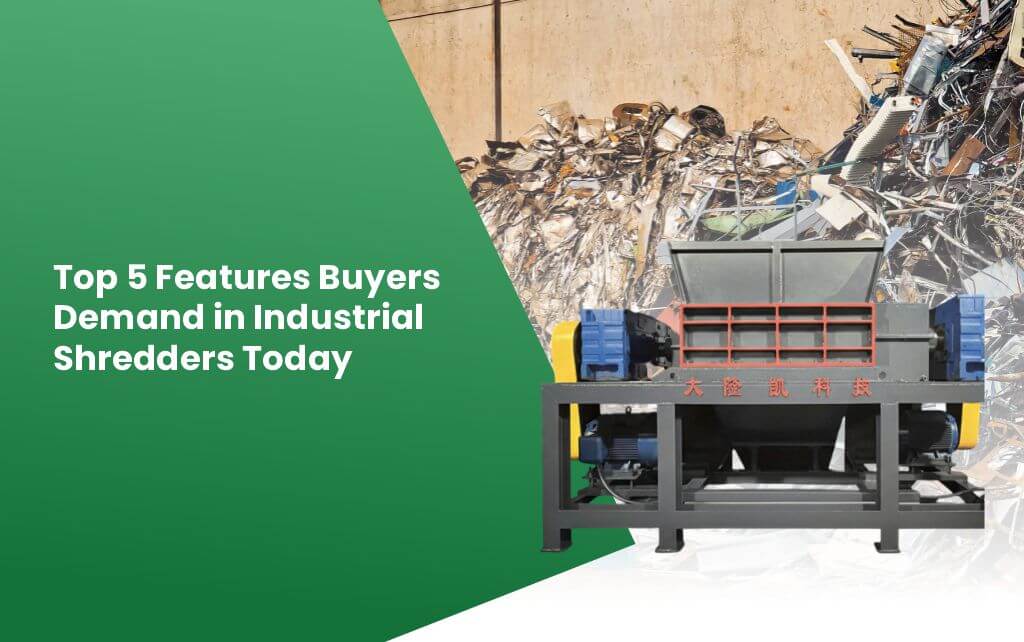
Top 5 Features Buyers Demand in Industrial Shredders Today
Industrial shredders are no longer just machines that tear material apart. Today’s buyers expect far more than basic size reduction. Whether the application involves metal scrap, plastic waste, e-waste, paper, tires, or mixed industrial waste, decision-makers want equipment that delivers performance, reliability, and long-term value.
With stricter waste management rules, rising operational costs, and higher expectations around efficiency, companies are carefully evaluating every feature before investing in an industrial shredder machine. The right choice can improve throughput, reduce downtime, and support sustainability goals. The wrong one can lead to frequent breakdowns and high maintenance costs.
This article explains the top five features buyers demand in industrial shredders today. It breaks down what truly matters on the factory floor, why these features are important, and how they impact real-world operations. Whether a buyer is sourcing equipment for recycling, manufacturing, or waste processing, these insights help make a confident and informed decision.
1. High Torque and Cutting Power for Tough Materials
Why Cutting Strength Matters More Than Ever
One of the first things buyers evaluate in an industrial shredder is its ability to handle tough and inconsistent materials. Modern waste streams are complex. They often contain a mix of metals, plastics, rubber, textiles, and contaminants. A shredder with weak torque or poor blade design struggles with these conditions.
High torque ensures the machine can process thick, dense, or reinforced materials without stalling. Buyers expect a heavy-duty industrial shredder to work smoothly, even when the input material is uneven or bulky.
Key Elements Buyers Look For
- Low-speed, high-torque drive systems that reduce wear and tear
- Hardened alloy steel blades designed for long life
- Optimized cutter geometry for efficient grabbing and tearing
For example, shredding steel drums, aluminum profiles, or rubber tires requires significantly more torque than paper or cardboard. Buyers want assurance that the machine can handle worst-case scenarios without constant operator intervention.
Practical Impact on Operations
Strong cutting power reduces pre-processing steps such as manual cutting or sorting. This saves labor costs and improves throughput. It also protects the motor and gearbox from overload, extending machine life. For buyers focused on long-term performance, torque is not a luxury. It is a necessity.
2. Energy Efficiency and Smart Power Consumption
Rising Energy Costs Drive Smarter Buying Decisions
Energy costs are a major concern for industrial facilities. Buyers now closely examine how much power an industrial waste shredder consumes under real operating conditions. Machines that look powerful on paper but waste energy during idle or low-load cycles are less attractive.
Energy efficiency is no longer just about saving money. It also supports environmental compliance and corporate sustainability goals.
Features That Signal Energy Efficiency
- Variable frequency drives (VFDs) that adjust speed based on load
- Automatic reverse and overload protection to prevent energy spikes
- Efficient motor design with optimized power-to-output ratio
Buyers increasingly prefer shredders that deliver power only when needed. For instance, when shredding light plastic waste, the system should not consume the same energy as it would for metal scrap.
Long-Term Benefits
Energy-efficient industrial shredders lower monthly operating costs and reduce stress on electrical systems. Over time, the savings can be substantial, especially in high-volume operations. Buyers recognize that a slightly higher upfront investment often pays off quickly through reduced power bills.
3. Durability, Build Quality, and Low Maintenance Design
Why Build Quality Is a Top Priority
Industrial shredders operate in demanding environments. Dust, vibration, shock loads, and continuous operation are part of daily life. Buyers want machines that are built to last, not just survive warranty periods.
A solid frame, high-quality components, and smart engineering separate reliable machines from frequent problem-makers.
What Buyers Inspect Closely
- Heavy-duty welded steel frames that resist deformation
- High-grade bearings and shafts are designed for continuous load
- Replaceable wear parts for cutters and screens
Maintenance accessibility also plays a major role. Buyers prefer machines where blades can be replaced or rotated easily, without dismantling half the unit.
Real-World Example
A recycling facility processing mixed industrial waste cannot afford frequent downtime. A poorly built industrial shredder machine may require weekly repairs, disrupting production schedules. In contrast, a robust design with wear-resistant parts keeps operations running smoothly for months.
Durability reduces downtime, maintenance labor, and spare parts expenses. For buyers, this feature directly affects profitability.
4. Versatility Across Materials and Applications
One Machine, Multiple Uses
Buyers today want flexibility. Instead of purchasing separate machines for different materials, they prefer industrial shredders that can adapt to changing needs. This is especially important for recycling companies and waste processors who handle diverse input streams.
A versatile shredder can process plastic, wood, paper, metal scrap, and even e-waste with minimal configuration changes.
Design Features That Enable Versatility
- Interchangeable cutter shafts for different material types
- Adjustable screen sizes to control the output particle size
- Single-shaft, dual-shaft, or four-shaft configurations, depending on application
For example, a dual-shaft industrial shredder may be ideal for bulky waste, while a single-shaft unit works well for controlled, uniform output. Buyers appreciate manufacturers who offer customization rather than one-size-fits-all solutions.
Business Advantages
Versatility allows businesses to expand services without major equipment upgrades. It also helps manage seasonal or market-driven changes in material supply. Buyers see adaptable shredders as future-ready investments rather than short-term fixes.
5. Automation, Safety, and Smart Control Systems
Modern Buyers Expect Intelligent Machines
Manual controls and basic switches no longer meet buyer expectations. Today’s industrial shredders are expected to include smart automation that improves safety, consistency, and ease of operation.
Buyers want machines that protect operators while simplifying daily tasks.
Automation Features in High Demand
- PLC-based control panels with intuitive interfaces
- Automatic start, stop, and reverse functions
- Load monitoring systems that prevent damage
Advanced controls help maintain consistent output quality. For example, if material jams occur, the system can automatically reverse and resume shredding without manual intervention.
Safety Is Non-Negotiable
Safety features are a major selling point. Buyers look for:
- Emergency stop buttons
- Safety interlocks on access doors
- Overload and thermal protection
In industrial environments, accidents can be costly and dangerous. Smart safety systems reduce risk and help facilities meet regulatory requirements.
6. Compliance, Noise Control, and Environmental Considerations
Regulations Shape Buying Decisions
Environmental and workplace regulations are becoming stricter worldwide. Buyers are increasingly aware of noise levels, dust generation, and emission standards when selecting industrial shredders.
Machines that help facilities stay compliant without additional modifications are highly valued.
Key Compliance-Related Features
- Low-noise operation through optimized cutting speed
- Dust control compatibility with extraction systems
- Efficient shredding that supports recycling goals
For instance, a quiet industrial shredder is essential in urban or indoor facilities where noise limits apply. Buyers appreciate machines that can operate without disturbing nearby work areas.
Supporting Sustainability Goals
Efficient shredding improves material recovery and reduces landfill waste. Buyers focused on sustainability see industrial shredders as critical tools in circular economy models. Equipment that supports cleaner and more efficient recycling aligns well with long-term environmental strategies.
Conclusion:
Buying an industrial shredder is a strategic decision, not a routine purchase. Today’s buyers demand machines that deliver power, efficiency, durability, versatility, and intelligent control. These five features define what separates reliable equipment from costly liabilities.
A modern industrial waste shredder must handle tough materials, consume energy wisely, require minimal maintenance, adapt to different applications, and operate safely. When these elements come together, businesses gain consistent performance and lower operating costs.
For companies looking to invest in high-quality industrial shredders, working with an experienced and trusted supplier is essential. Super Recycling Solution understands the practical challenges buyers face and offers solutions designed for real-world performance, not just specifications on paper.
Businesses ready to upgrade or expand their shredding capabilities should evaluate their needs carefully and choose equipment built for today’s demands and tomorrow’s growth. The right shredder is not just a machine. It is a long-term partner in efficient and responsible waste management.